Mouth Taping for Sleep: A Trend Ahead of the Science
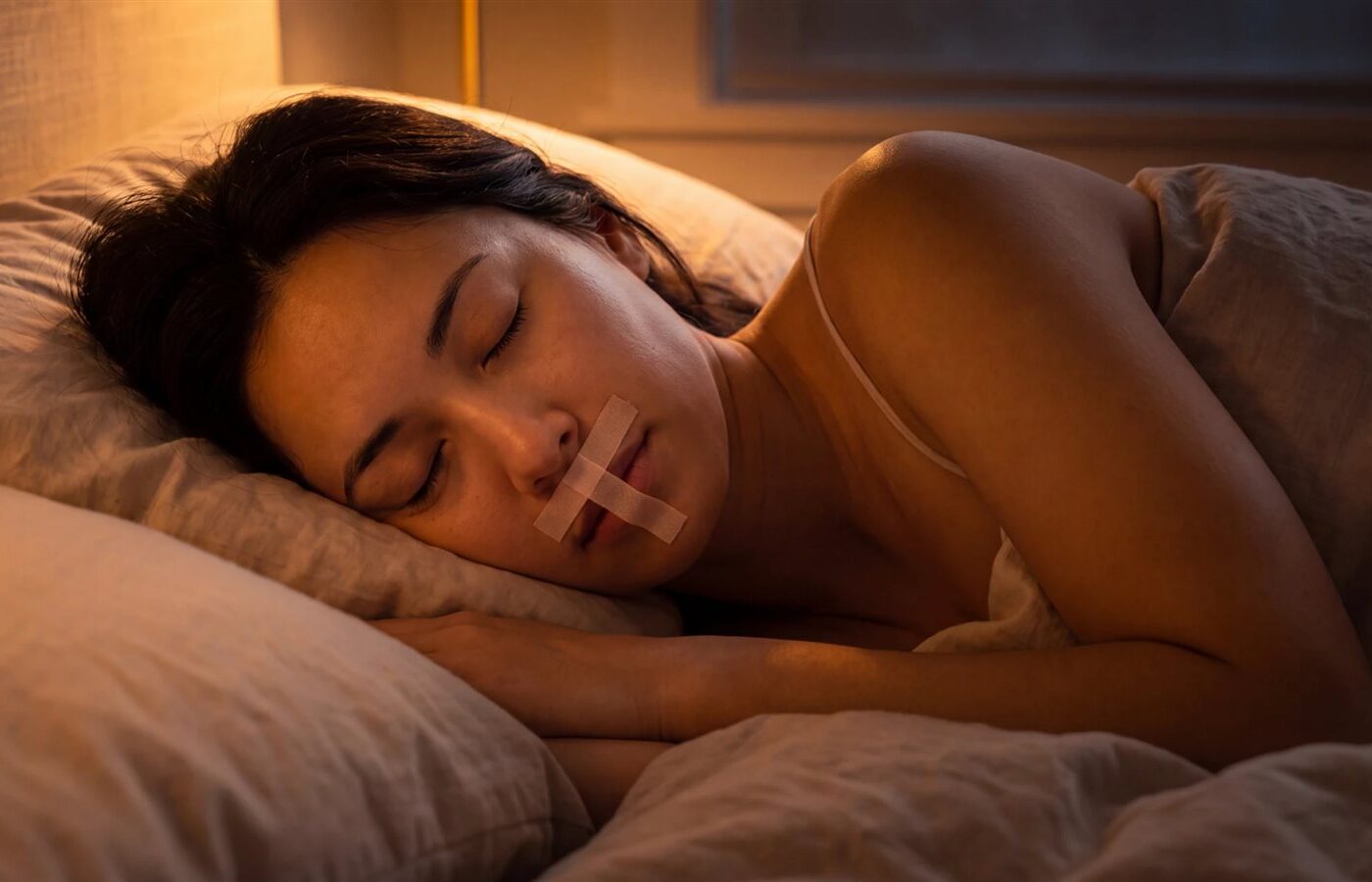
Scroll through social media long enough and you will see people sleeping with a strip of tape over their lips. Mouth taping is promoted for better sleep, less snoring and even better health. Before you try it, here is what researchers have actually found. This is general education, not medical advice.
The idea behind the trend
Breathing through the nose filters and warms the air, and some people breathe through the mouth at night, which can dry the mouth and sometimes goes along with snoring. Tape is meant to keep the lips closed so you breathe through your nose. It sounds simple, which is part of its appeal.
Where the evidence stands
A 2025 systematic review in PLOS One, led by researchers including Dr. Brian Rotenberg, looked at the published evidence on mouth taping. It found only 10 eligible studies. Based on summaries of the review:
- Only a small number of those studies, about 2 of 10, reported benefits, and these involved people with mild sleep apnea.
- Several of the studies, about 4 of 10, warned that taping could pose a risk if breathing becomes blocked during sleep.
- Some studies excluded people with a blocked nose, who may be the most at risk of trouble.
- The authors described the evidence as limited and not consistently high quality, and called for further research.
In short, the trend is well ahead of the science.
Why caution makes sense
- Sleep apnea is serious. Loud snoring, gasping, or daytime exhaustion can signal obstructive sleep apnea, which needs a medical evaluation. Taping the mouth does not treat it and could delay care. Our look at sleep apnea and weight explains the link.
- A blocked nose makes it risky. Colds, allergies or a deviated septum can make nose-only breathing hard.
- Skin irritation is common with tape on the lips.
What you can try instead
- Keep a consistent sleep schedule and a dark, cool bedroom, as described in our guide to sleep basics.
- Treat nasal congestion and allergies with your clinician’s guidance.
- Talk with a doctor about persistent snoring, mouth breathing or daytime sleepiness. A sleep study can find out what is really happening.
A fair verdict
There is no good evidence that taping your mouth shut improves sleep in healthy people, and some evidence that it carries risks. If something is stopping you from sleeping well, a conversation with a clinician is a safer first step than a roll of tape.
Sources
- Systematic review of mouth taping for mouth breathing, sleep-disordered breathing and sleep apnea. PLOS One, May 2025 (doi 10.1371/journal.pone.0323643; figures here come from coverage and summaries, check the paper for exact numbers).
- HealthDay. Mouth taping for better sleep: little benefit, lots of risk, review says. May 2025.
Weight Wire is free to read. A free account lets you save articles and use the private journal and food lookup, which are free to use too. Create my free account

Weight Wire Editorial Team
Writer at Weight Wire.