Cycle Syncing: Planning Workouts Around Your Month
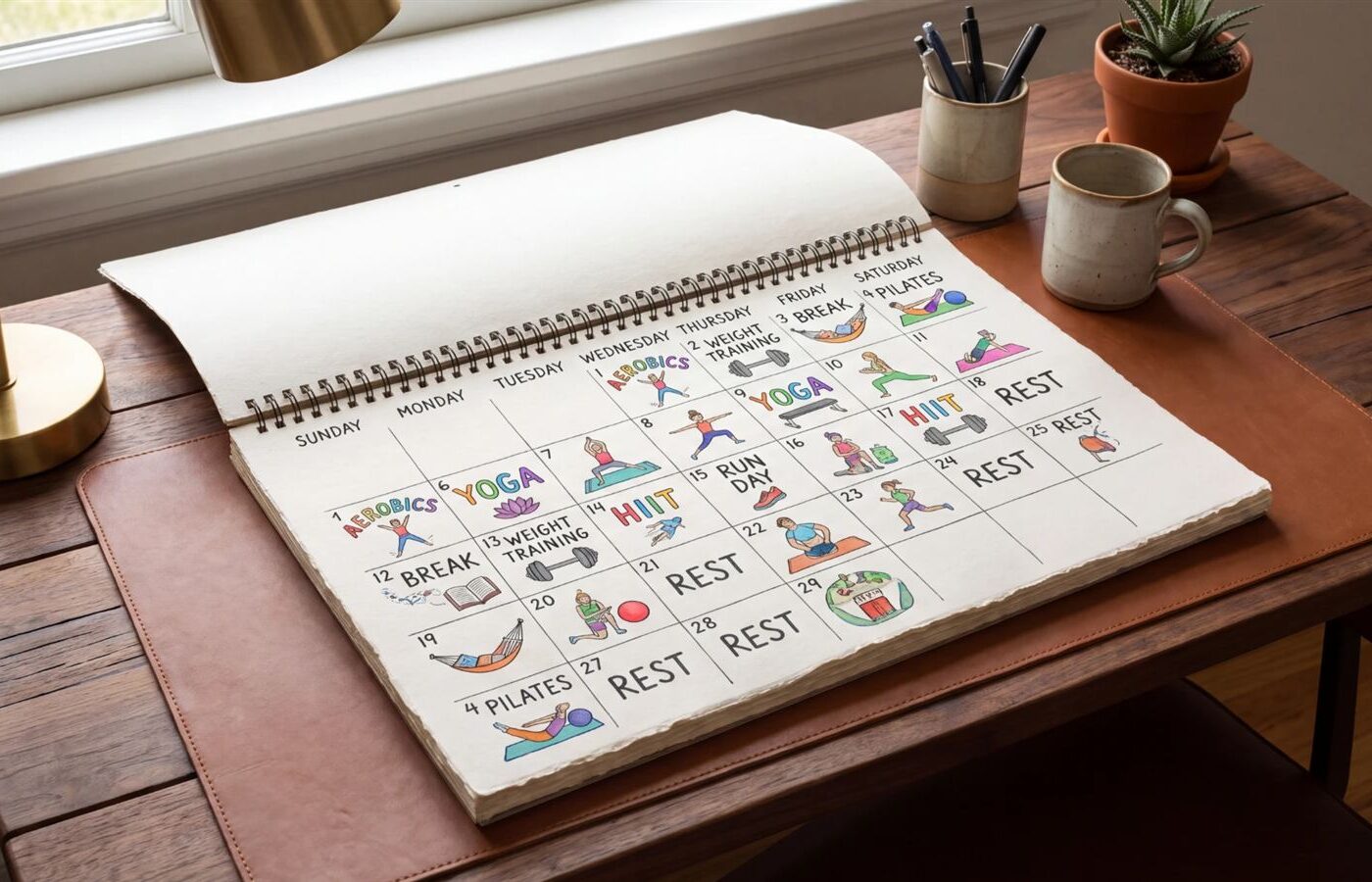
“Cycle syncing” means planning your workouts around the phases of your menstrual cycle, and it is all over social media. It is a lovely idea: get to know your body’s rhythm and work with it. So what does the research say about whether it changes your performance? Let’s take a friendly, honest look.
What people mean by cycle syncing
The usual advice goes something like this: lift heavier or push harder in the first half of the cycle, when estrogen is rising, and switch to gentler movement such as walking or yoga near the end. The thinking is that hormones change energy, mood and recovery across the month, so training could follow along.
Hormones really do shift across the cycle, and many people notice differences in how they feel. The question is whether those differences are big enough to change how you should train.
What the largest review found
A 2020 systematic review and meta-analysis in Sports Medicine, led by Kelly McNulty, pulled together 78 studies of exercise performance in women with regular cycles, involving nearly 1,200 participants in total. Its main findings:
- Performance might be reduced by a trivial amount in the early follicular phase (the days around the period itself) compared with other phases.
- The pooled difference was tiny, and the range of plausible values included no difference at all.
- The authors rated the overall quality of the evidence as low, and the studies varied a great deal.
- They did not recommend general rules based on cycle phase. Instead they suggested a personal approach, paying attention to how you respond.
In everyday words: on average, the cycle does not seem to make a big dent in what your body can do, and individuals differ a lot. Some people feel strong and bright all month, and some feel noticeably flatter on certain days.
What this does and does not tell us
- It looked at performance, not long-term results. We do not have solid evidence that matching your program to your cycle builds more muscle or burns more fat over months.
- Studies were hard to compare. Researchers measured cycle phase in different ways, and many studies did not confirm hormone levels.
- Averages hide individuals. Your own experience is real information, even when the average is small.
How to make it work for you
You do not need a perfect system. If the idea appeals to you, treat it as a gentle experiment:
- Notice, then plan. For two or three cycles, jot down your energy, mood and how workouts felt. Weight Wire’s free journal has places for mood, notes and your activity log, which makes patterns easier to spot.
- Keep the habit steady. Consistency matters more than precise timing. Our guide to how often to lift shows how flexible a good plan can be.
- Give yourself permission to flex. If you feel low on energy, a walk, a stretch or a short session still counts. Even a minute or two of movement adds up.
- Protect your sleep. Rest affects how workouts feel; see sleep basics from NIH.
When to check in with a clinician
Very heavy or painful periods, missed periods, or big swings in energy are worth mentioning to a doctor, especially if you are training hard. Hormonal birth control, pregnancy and menopause also change the picture, and the studies above focused on women with regular cycles.
A lovely idea, held lightly
Cycle syncing is a great prompt to tune in to your body, and tuning in is genuinely useful. The research suggests you do not have to follow a strict phase-by-phase plan to get good results. Pay attention, be kind to yourself on low-energy days, and keep showing up in whatever way fits.
Sources
- McNulty KL, Elliott-Sale KJ, Dolan E, et al. The effects of menstrual cycle phase on exercise performance in eumenorrheic women: a systematic review and meta-analysis. Sports Medicine, 2020;50(10):1813-1827 (figures from the abstract and summaries of the paper).
- U.S. Department of Health and Human Services. Physical Activity Guidelines for Americans, 2nd edition.
Weight Wire is free to read. A free account lets you save articles and use the private journal and food lookup, which are free to use too. Create my free account

Weight Wire Editorial Team
Writer at Weight Wire.