The Natural GLP-1 Trend and What Food Can Actually Do
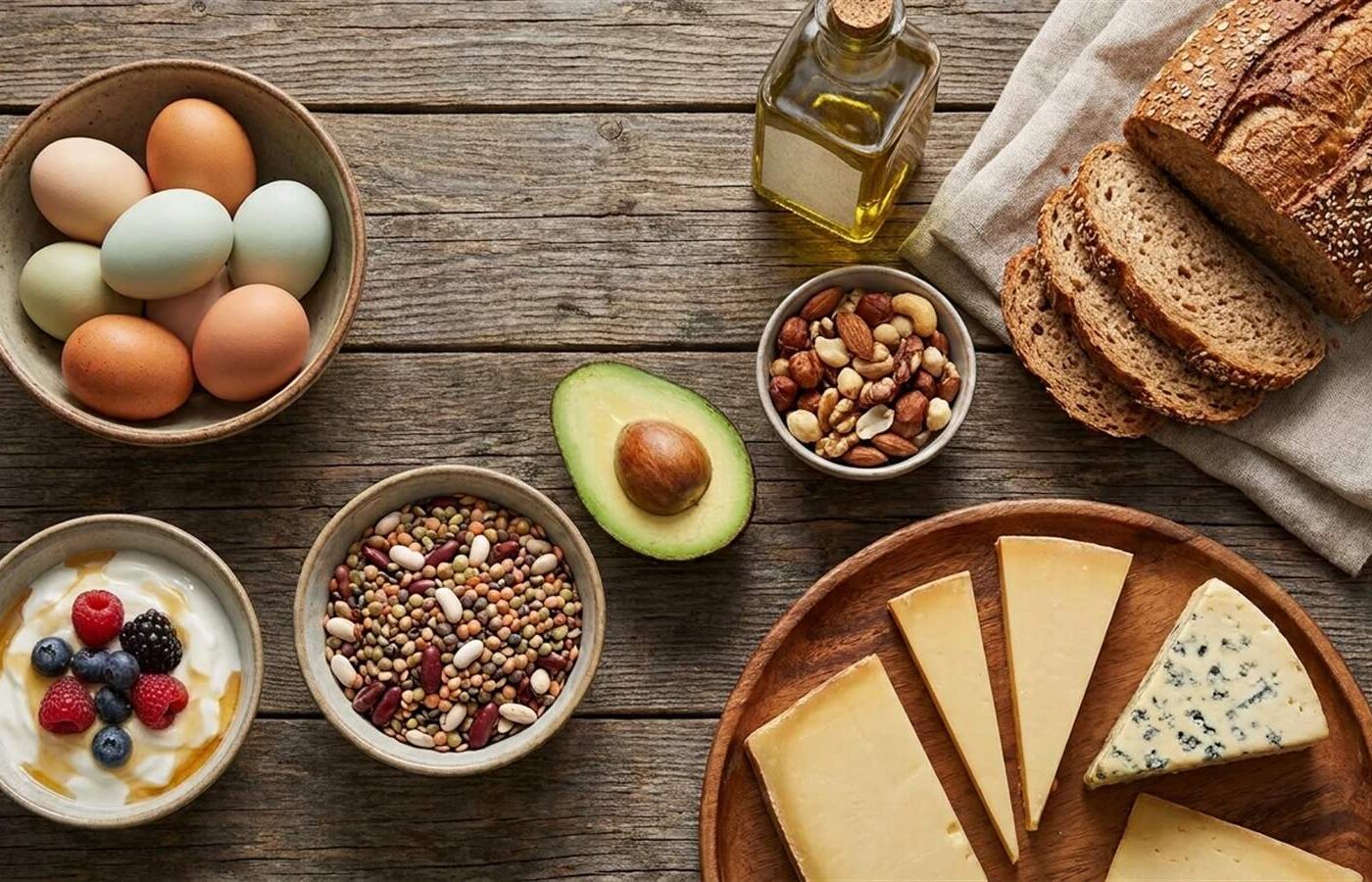
Scroll through social media and you will find a wave of posts promising foods that “boost your natural GLP-1” and mimic weight-loss injections. The idea is not made up: your gut really does release GLP-1 when you eat. The question is how far food can take that. This is general education, not medical advice, and it covers food only; we do not recommend supplements.
What GLP-1 does in your body
GLP-1 is a hormone released by cells in your gut after a meal. It helps the pancreas release insulin, slows how quickly the stomach empties and tells the brain you have had enough. Your body breaks it down within minutes, so its effects are brief and tied to meals. The medications were designed to resist that breakdown, which is a big part of why they work differently from a normal meal.
What reviews say food can do
Several reviews have looked at what triggers natural GLP-1 release in people and animals.
- Protein appears to be a potent trigger. In small studies, such as one in nine young women with obesity, a whey protein drink raised GLP-1 and a fullness hormone called PYY more than a carbohydrate (maltodextrin) drink.
- Fat and carbohydrate each stimulate GLP-1 too, and the size of a meal matters a lot.
- Protein with calcium may be a particularly strong combination, according to a narrative review of human studies.
- Fiber gives mixed results. Fiber-rich grains, nuts, avocados and eggs seem to influence GLP-1, but much of that evidence is indirect, and at least one trial of a resistant starch found lower levels afterward.
The reviewers’ own conclusion is cautious: it may be a useful strategy, but more work is needed on doses and combinations before firm dietary advice can be given.
From a hormone blip to real-world weight
A higher GLP-1 reading in the hours after a meal is a short-term lab measurement. It is not the same as lasting weight change, and we did not find trials showing that eating “GLP-1 foods” produces anything close to the weight loss seen with the medications. Those studies measured hormone levels, usually in small groups over a few hours.
A practical approach that needs no trend
The foods that come up in the research are ones that are already well supported for other reasons:
- Include protein at meals. Our guide to eggs and heart health covers one everyday source.
- Eat plenty of fiber-rich plants, including beans and lentils and whole grains.
- Enjoy nuts, avocado and olive oil as part of a balanced pattern like the one in our Mediterranean diet guide.
Eating this way is good for you whether or not it nudges a hormone. It just should not be sold as a substitute for medication.
Spotting the hype
- Be wary of “mimics the injections” claims. Food does not do what a drug engineered to last for days does.
- Look at what was measured. A change in a hormone for a few hours is not a weight outcome.
- Ask who is selling. Many posts are linked to products.
- Talk with a clinician if you are thinking about medication or have a health condition.
Sources
- Nutritional modulation of endogenous glucagon-like peptide-1 secretion: a review (PMC5148911).
- Protein- and calcium-mediated GLP-1 secretion: a narrative review (PMC8634310).
- Whey proteins reduce appetite, stimulate anorexigenic gastrointestinal peptides and improve glucometabolic homeostasis in young obese women. Nutrients, 2019 (PMC6412413).
Weight Wire is free to read. A free account lets you save articles and use the private journal and food lookup, which are free to use too. Create my free account

Weight Wire Editorial Team
Writer at Weight Wire.