Why Some Foods Fill You Up More Than Others
Two snacks can have the same calories and leave you feeling completely different an hour later. One keeps you comfortable until dinner; the other has you looking for more. Researchers have tried to measure that difference. This is general education, not medical advice.
A classic experiment
In 1995, Susanna Holt and colleagues at the University of Sydney published “A satiety index of common foods” in the European Journal of Clinical Nutrition. They fed groups of 11 to 13 volunteers 240-calorie portions of 38 different foods and asked them to rate their fullness every 15 minutes for two hours. Each food was scored against white bread, which was set at 100 percent.
- Boiled potatoes scored highest, at about 323 percent of white bread.
- Croissants scored lowest, at about 47 percent, roughly seven times lower than boiled potatoes.
- Most of the foods, about three quarters, were at least as filling as white bread.
What seemed to make a food filling
Across the 38 foods, satiety scores tended to rise with the amount of protein, fiber and water in the food, and to fall with fat content. That matches what many people notice: a bowl of soup, a baked potato or a plate of beans feels more filling than a pastry of the same calories.
The fine print
- It was small and short. Each food was tested in small groups for two hours, not in everyday meals.
- It measured feeling full, not weight loss. Later studies of eating and weight are a separate question.
- Preparation matters. The potatoes in the study were boiled, and French fries did not do nearly as well, according to summaries of the work.
- People differ, and so do meals, habits and appetite.
Putting it to use
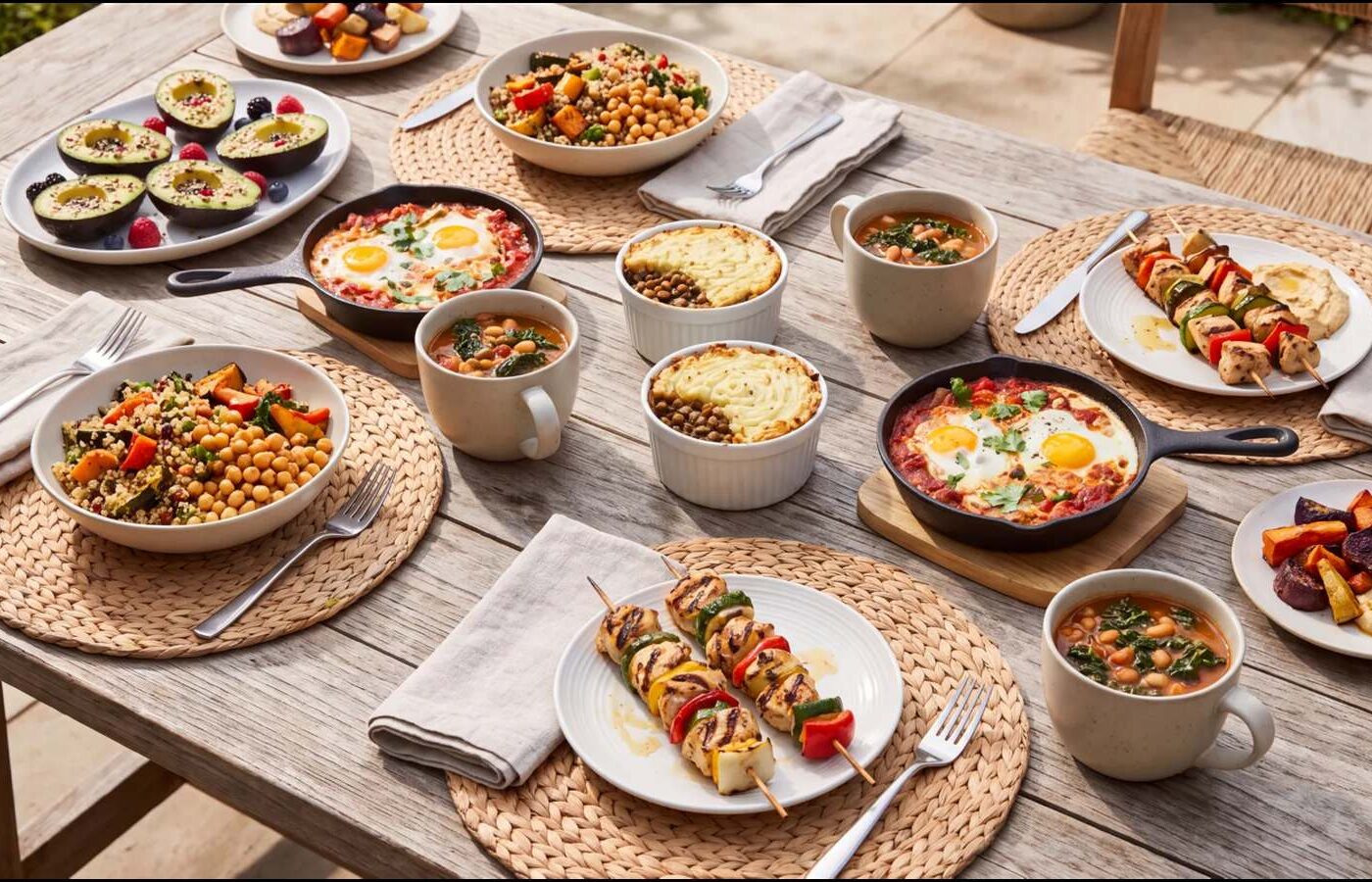
- Build meals around protein, fiber and water-rich foods. Our guides to protein, fiber and beans and lentils explain why they help.
- Notice how foods affect you. A few days of jotting down how full you feel after meals can show what works for you, and your free journal has hunger and fullness check-ins for that. Disclosure: the journal is our tool and was not part of the research above.
- Do not turn it into a rulebook. A croissant is not a failure; it simply may not hold you over for long. Our look at ultra-processed foods and weight adds more context.
Sources
- Holt SH, Miller JC, Petocz P, Farmakalidis E. A satiety index of common foods. European Journal of Clinical Nutrition, 1995;49(9):675-690 (figures from the abstract and summaries).
Weight Wire is free to read. A free account lets you save articles and use the private journal and food lookup, which are free to use too. Create my free account

Weight Wire Editorial Team
Writer at Weight Wire.