Protein Leverage: Why Your Appetite May Chase Protein
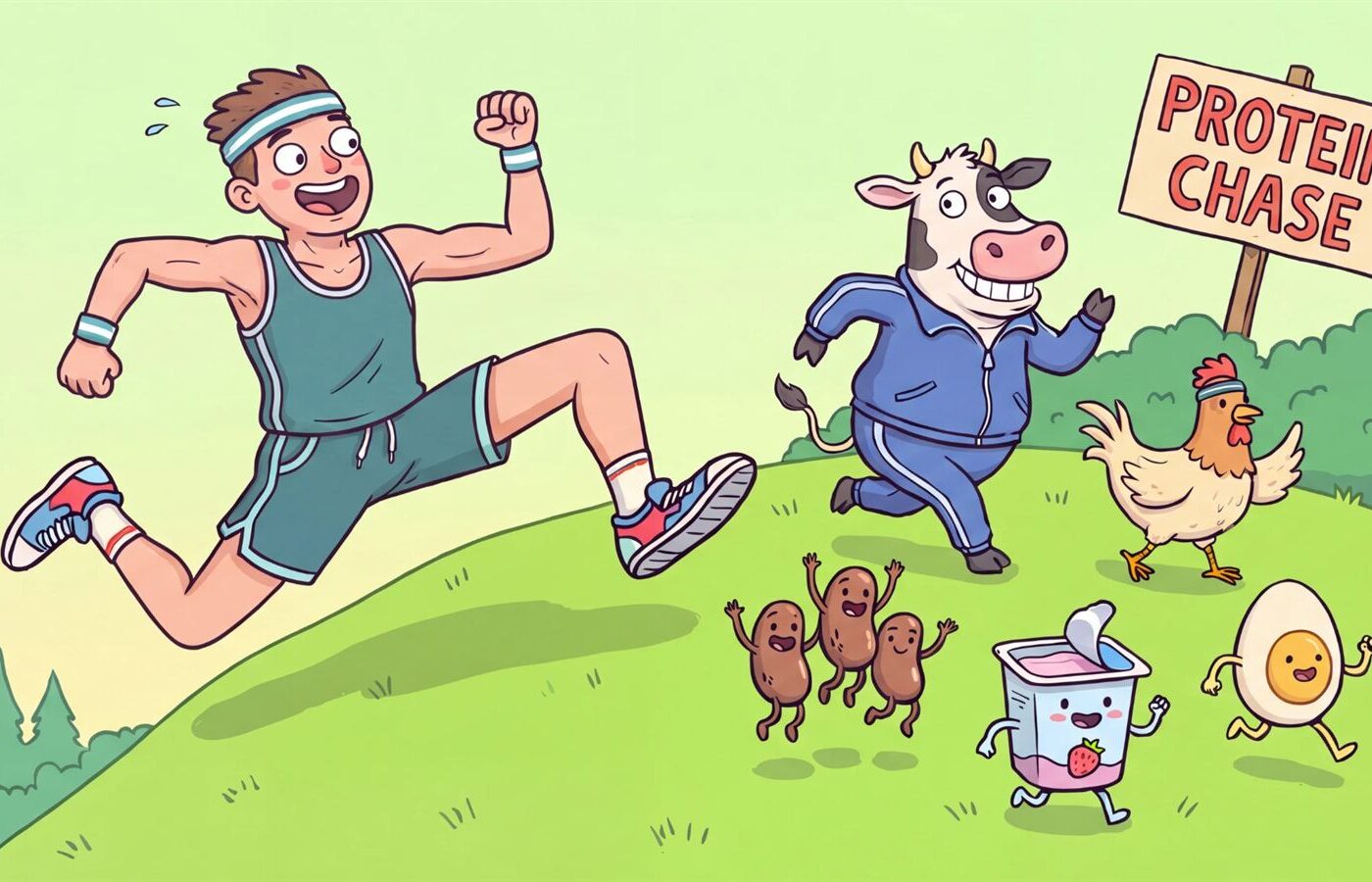
Have you ever noticed that a snack-heavy day leaves you hungry again an hour later, while a protein-rich meal keeps you going? Scientists have a theory about why: your body may be quietly steering your appetite toward getting enough protein. It is called protein leverage, and one small experiment put it to the test. Let us see what happened.
The idea behind protein leverage
The protein leverage hypothesis, developed by researchers Stephen Simpson and David Raubenheimer, suggests that people have a strong drive to reach a certain amount of protein each day. If the foods in front of you are low in protein, you may keep eating to get there, and the extra calories come along for the ride. In a world full of snack foods and processed meals that are low in protein, that could nudge total eating upward.
Putting it to the test
In 2011, a team led by Alison Gosby published a randomized experiment in PLoS ONE. Twenty-two lean adults stayed in a research setting for three separate four-day periods. Each time, they ate from menus built from the same 28 foods, but the share of calories from protein changed: 10 percent, 15 percent or 25 percent. They could eat as much as they liked, and the researchers tracked their hunger and food intake.
What they found
- Lower protein meant more eating. When protein dropped from 15 to 10 percent of calories, total energy intake rose by about 12 percent, mostly from savory snacks between meals.
- Higher protein did not change intake. Moving from 15 up to 25 percent did not significantly change how much people ate in this study.
- Hunger followed. On the last day, hunger grew more in the hours after a 10 percent protein breakfast than after a 25 percent one.
- The effect was partial. The authors noted that people did not eat enough extra to make up fully for the missing protein, so it works more like a nudge than a rule.
Keeping it in proportion
- The study was small and short. Twenty-two people over four days cannot tell us what happens over months of ordinary life.
- The participants were lean. We cannot assume the same pattern holds for everyone.
- It does not prove high-protein diets cause weight loss. Protein is just one part of what makes a meal filling, alongside fiber, volume and how much you enjoy it.
- More is not always better. People with kidney or other medical conditions should ask their clinician about the right amount for them.
Easy ways to bring protein into your day
- Start with breakfast. Eggs, yogurt or cottage cheese can set a steady tone; see yogurt and weight and our cottage cheese guide.
- Think beans and lentils. They bring protein and fiber together; see beans, lentils and chickpeas.
- Anchor snacks with something filling. A handful of nuts or a piece of cheese beats a bag of chips for staying power.
- Read the label. Check the protein line on packaged foods; our nutrition label guide shows how.
- Look at the whole picture. Fullness comes from several things at once, as explained in why some foods fill you up and energy density.
Where this fits
If you wonder how much protein you really need, our guide to protein on every label walks through it. Weight Wire’s free Food Lookup can show the protein in many foods, and your free journal can keep track of how different breakfasts leave you feeling. As always, the numbers are estimates, and your own experience counts.
Sources
- Gosby AK, Conigrave AD, Lau NS, et al. Testing protein leverage in lean humans: a randomised controlled experimental study. PLoS ONE, 2011;6(10):e25929 (22 lean adults, three four-day periods; figures from the paper’s abstract and its summaries).
- Simpson SJ, Raubenheimer D. Obesity: the protein leverage hypothesis. Obesity Reviews, 2005 (background on the hypothesis).
- U.S. Department of Agriculture. FoodData Central, for nutrient values of foods.
Weight Wire is free to read. A free account lets you save articles and use the private journal and food lookup, which are free to use too. Create my free account

Weight Wire Editorial Team
Writer at Weight Wire.