Eating Slowly: Why a Calmer Pace Can Help
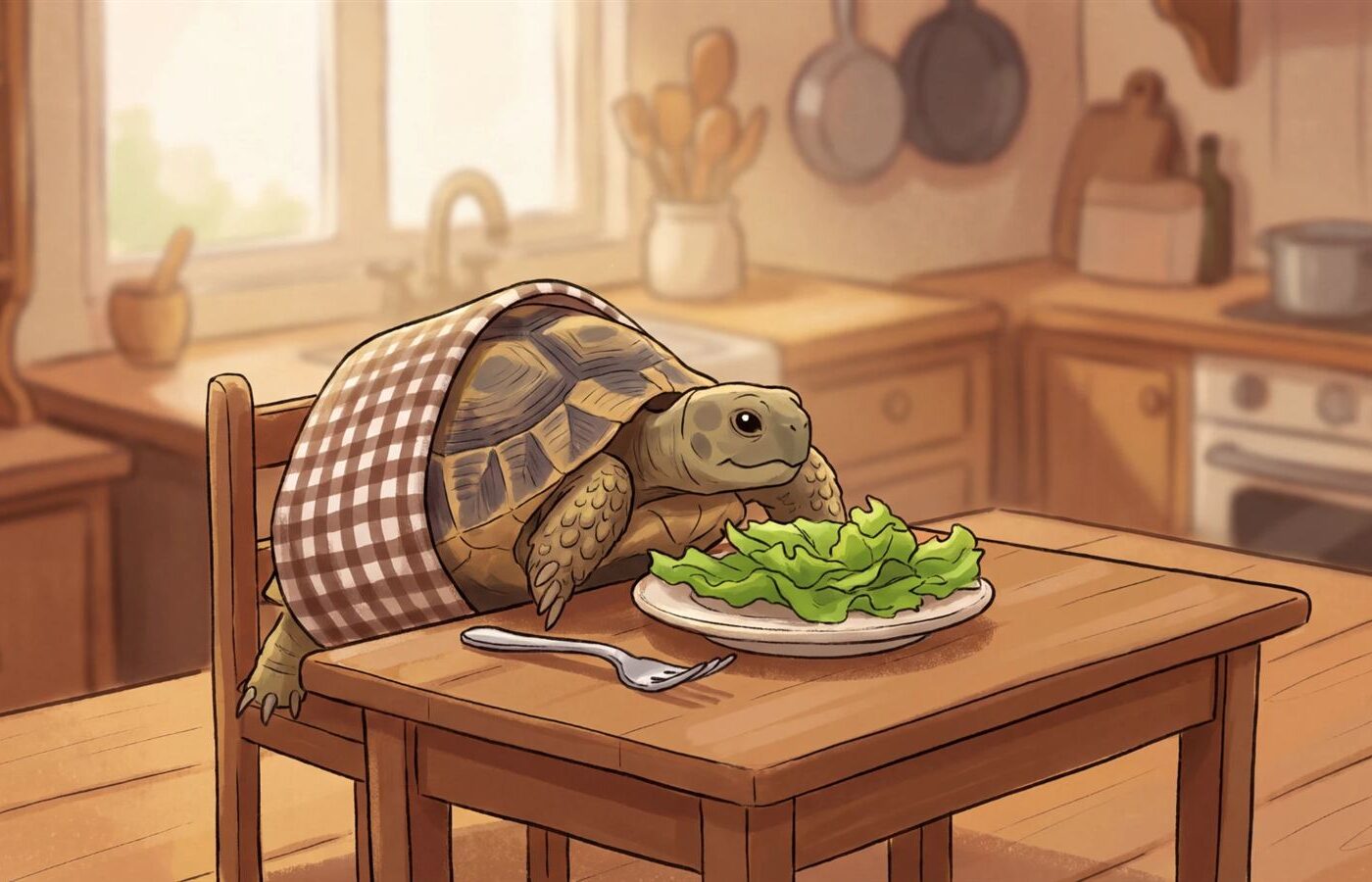
You have probably heard “slow down and chew.” It turns out that advice has been tested in real experiments, and the results are encouraging. Here is what happens in your body and brain when you give a meal a little more time, and some gentle ways to try it.
The idea behind a slower pace
Fullness signals do not arrive instantly. As food moves through your digestive system, hormones and nerve signals tell your brain you have had enough, and that takes a little while. If you finish a meal very quickly, you can eat a good deal before those signals catch up. A slower pace gives them time to arrive.
What a large review found
In 2014, a team led by Eric Robinson, with Susan Jebb among the authors, published a systematic review and meta-analysis in the American Journal of Clinical Nutrition. It gathered 22 studies that each did something simple and clever: they changed how fast people ate and measured the result.
- Overall, eating more slowly was linked with eating less than eating more quickly.
- This held no matter how the eating rate was changed, such as by asking people to take smaller bites or to chew more.
- Hunger at the end of the meal did not differ significantly between slower and faster eaters. In other words, people ate less without feeling hungrier afterward, at least in the short term.
This is a summary of the paper’s abstract and a summary of its findings; we did not have the full text, so we are not quoting exact amounts.
How far can we stretch this?
- The studies were experiments, often at a single meal. They tell us what happens at the table, not what happens over years.
- Methods varied. Different studies slowed people down in different ways, so the exact size of the effect depends on the setup.
- Eating slowly is not a guarantee. It is one helpful nudge among many, not a rule that works the same for everyone.
Easy ways to slow down
- Put your fork down between bites. It is a tiny habit that does a lot of the work.
- Sit at a table, away from screens. Distraction makes it easy to lose track of how much you have eaten.
- Take a sip of water between mouthfuls. It adds natural pauses.
- Start with something that takes time to eat. A bowl of soup is a classic; see soup before the meal.
- Choose foods that keep you full. Our guides to foods that fill you up and energy density pair well with a slower pace.
- Check in halfway. Pause and ask, “How hungry am I now?” Weight Wire’s free journal has simple hunger and fullness check-ins if you would like to practice noticing.
Why this feels so good
Slowing down is not about restriction. It is about enjoying your food more and noticing your own signals, which is a skill that gets easier with practice. The hormones that tell you that you are full are worth knowing about, and our explainer on leptin, ghrelin and GLP-1 goes into the details.
A small experiment for tonight
At your next meal, try putting your fork down after each bite for just the first five minutes. Notice the flavors, the temperature, the texture. If the habit sticks, wonderful; if not, you have still had a calmer meal, and that is a win.
Sources
- Robinson E, Almiron-Roig E, Rutters F, et al. A systematic review and meta-analysis examining the effect of eating rate on energy intake and hunger. American Journal of Clinical Nutrition, 2014;100(1):123-151 (findings from the abstract and summaries; the full text was not read).
Weight Wire is free to read. A free account lets you save articles and use the private journal and food lookup, which are free to use too. Create my free account

Weight Wire Editorial Team
Writer at Weight Wire.