The Minnesota Starvation Experiment and What It Taught Us About Dieting
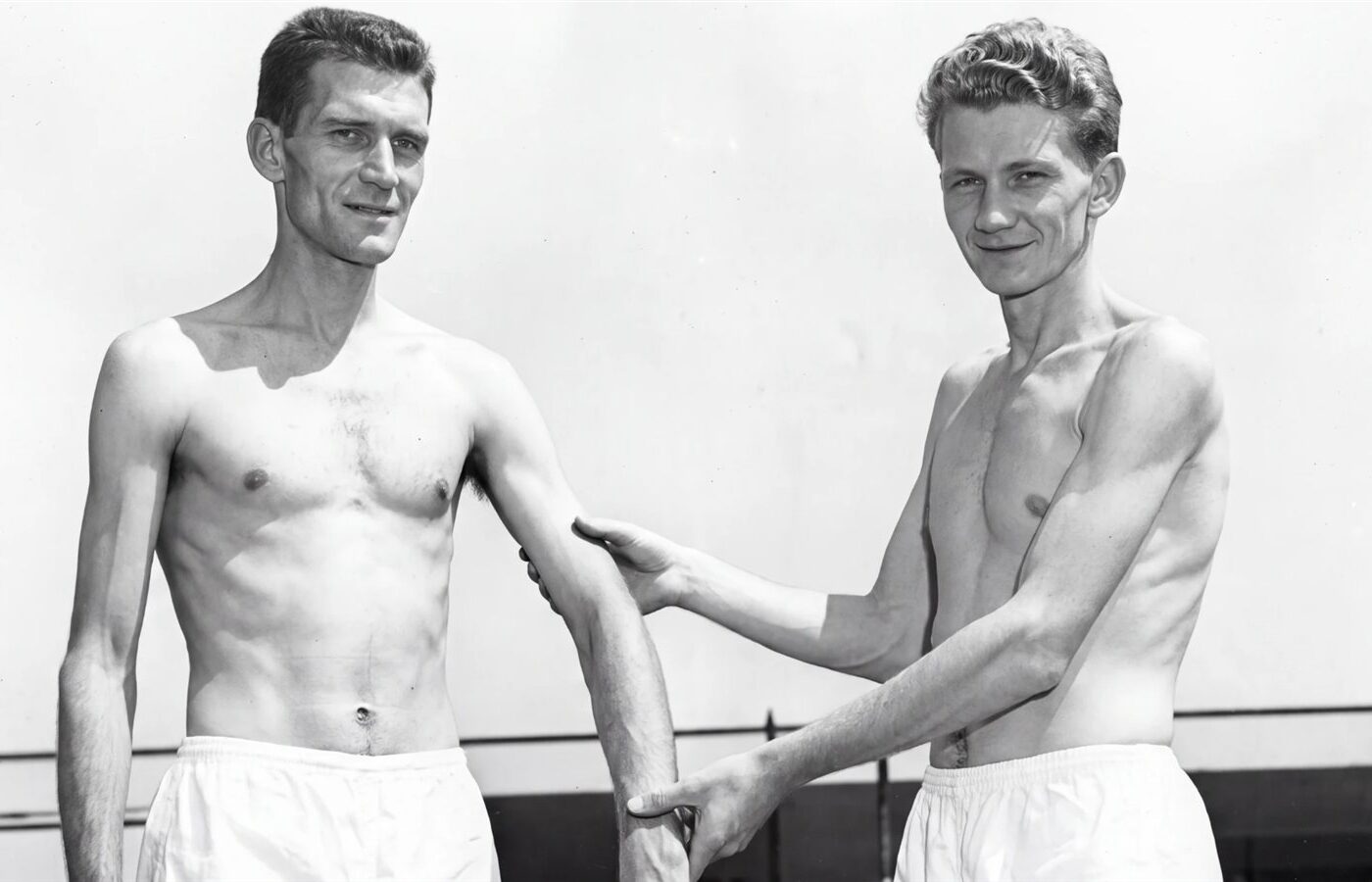
Between 1944 and 1945, a research team at the University of Minnesota did something that could not be done today: they deliberately underfed healthy volunteers for six months and watched what happened. The results shaped how scientists think about dieting, hunger and the mind, and they still echo in conversations about weight loss and weight regain. This is general education, not a guide to eating.
The experiment
Led by physiologist Ancel Keys, the study enrolled 36 men, chosen from more than 200 volunteers, who were conscientious objectors during World War II. The plan had four parts: a 12-week baseline period, a 24-week semi-starvation period and two recovery phases. During the semi-starvation phase, the men ate roughly 1,570 to 1,600 calories a day (sources vary slightly), which was far less than they needed given their daily workload and walking. By the end, each man had lost an average of about 25 percent of his starting body weight.
What the men experienced
- Food took over their thoughts. The men became preoccupied with food, talking about meals, collecting recipes and reading about cooking.
- Mood suffered. Reports describe rising depression, irritability and, for many, periods of severe emotional distress.
- The body slowed down. Heart rate and body temperature dropped, interest in other activities faded and basal metabolic rate decreased.
Recovery and rebound
When the men were refed, many of them ate far more than usual for a time. A later computer-model analysis of the data suggested that body fat rebounded past its original level and that it could take more than a year after the experiment for it to settle back within a small margin of where it began. That finding is a model’s estimate rather than a direct measurement, but it fits the pattern that many dieters describe.
What it can and cannot teach us
- The conditions were extreme. A 25 percent weight loss in 24 weeks, in men who were also working and walking a lot, is nothing like a modest, planned change in eating. Today’s guidance for most adults looks very different.
- The participants were healthy volunteers. Their experience may not match that of people living with obesity, whose bodies and histories differ.
- It shows biology and psychology are linked. Hunger, mood and thinking changed together, which is part of why very restrictive plans are hard to sustain.
Echoes in modern research
The experiment helps explain why the body tends to defend its weight, a topic we explore in our piece on set point theory, and why progress can stall, as in weight-loss plateaus. Later work on contestants from a televised weight-loss show found that metabolism stayed lower years later, as we describe in the Biggest Loser study. For a gentler way of thinking about hunger, see intuitive eating.
Sources
- Keys A, Brozek J, Henschel A, Mickelsen O, Taylor HL. The Biology of Human Starvation. University of Minnesota Press, 1950 (the original report; not read in full for this article).
- American Psychological Association. Monitor on Psychology, October 2013, on the Minnesota experiment and hunger.
- Summaries of the study design, calorie intake, weight loss, psychological effects and the refeeding model, as described in secondary sources including a computer-model analysis of the data.
Weight Wire is free to read. A free account lets you save articles and use the private journal and food lookup, which are free to use too. Create my free account

Weight Wire Editorial Team
Writer at Weight Wire.