Vision Changes and GLP-1 Medications: Keeping It in Proportion
If you are taking a GLP-1 medication, or thinking about one, you may have seen headlines about eyes and vision. It is natural to wonder what is going on. The good news is that regulators looked closely, and the picture is calmer than the headlines suggest. Let us walk through it together, plainly and kindly.
What is NAION?
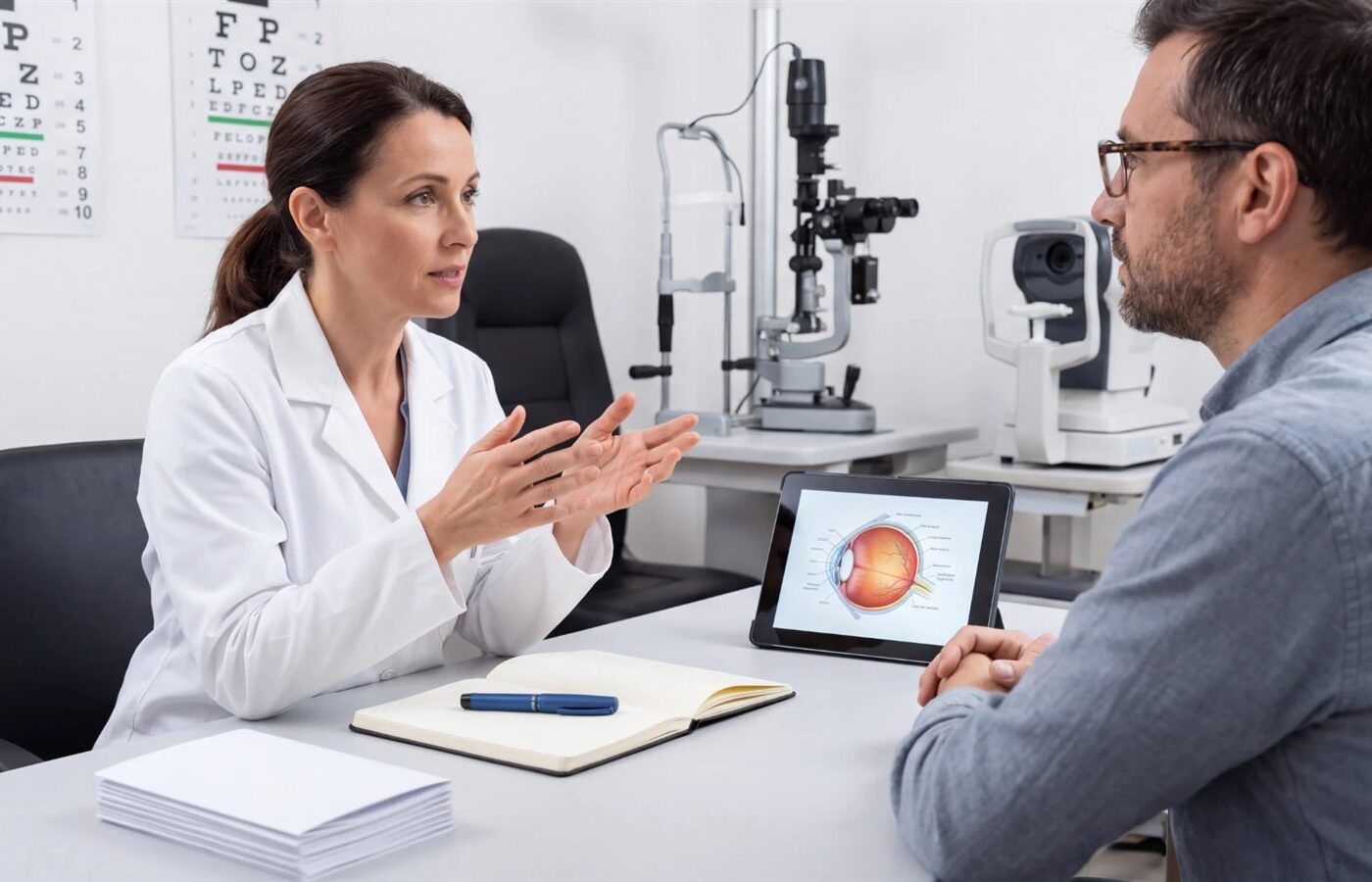
NAION stands for non-arteritic anterior ischemic optic neuropathy. In simple terms, it happens when the optic nerve at the back of the eye does not get enough blood flow. It usually shows up as sudden, painless vision loss in one eye. It can happen to people who have never taken any of these medications, and it is uncommon in the general population.
What European regulators concluded
In early 2025, the safety committee of the European Medicines Agency (known as PRAC) began reviewing reports of NAION in people taking semaglutide medicines. In June 2025 it announced its conclusion:
- It is considered a very rare side effect. The committee said it may affect up to 1 in 10,000 people taking these medicines.
- That is about one extra case per 10,000 person-years. One person-year means one person taking the medicine for one year, so the extra risk in any single person is very small.
- The label was updated. Product information now lists NAION as a very rare side effect.
- The advice is simple. If you notice sudden loss of vision or quickly worsening eyesight, contact your doctor without delay. If NAION is confirmed, treatment with the medicine should be stopped.
How the committee got there
The review looked at studies of real-world health records. Several large studies in adults with type 2 diabetes suggested roughly a doubling of the (already small) risk compared with people not taking the medicine. These were observational studies, which can show a link but cannot prove cause. The manufacturer of one of the medicines said the data did not show a reasonable possibility of a causal relationship, and some studies did not find an increased risk. The regulator weighed it all and chose to add the information to the label so that people and clinicians know what to watch for.
Putting the risk in context
- Very rare means very rare. The vast majority of people taking these medicines will never have this problem.
- Most of the data comes from people with type 2 diabetes. That group often has other eye and blood-vessel risks of its own, which makes the picture harder to untangle.
- Weight loss is not off the table. The benefits and risks are weighed one person at a time, with a clinician.
Simple steps that put you in the driver’s seat
- Tell your care team about your eye history. Mention any past optic nerve problems, glaucoma, or sudden vision changes before you start.
- Keep up with routine eye exams, especially if you have diabetes or high blood pressure.
- Know the warning sign. Sudden vision loss in one eye, or vision that quickly gets worse, deserves a same-day call to your doctor or an eye care professional.
- Do not stop a medicine on your own. Talk with your clinician first.
- Keep learning. For the bigger picture, see who qualifies for a GLP-1 medication, side effects in the big trials and eating well while taking a GLP-1 medication.
This article is for general education and is not medical advice. Weight Wire does not recommend or endorse any medication. Talk with your healthcare professional about your own situation.
Sources
- European Medicines Agency. PRAC concludes eye condition NAION is a very rare side effect of semaglutide medicines. June 2025. ema.europa.eu
- The Pharmaceutical Journal. Eye disorder is a “very rare” side effect of weight-loss drugs, concludes EMA review. pharmaceutical-journal.com
- TCTMD. Eye condition a “very rare” side effect of semaglutide, EMA says. tctmd.com
Weight Wire is free to read. A free account lets you save articles and use the private journal and food lookup, which are free to use too. Create my free account

Weight Wire Editorial Team
Writer at Weight Wire.