Movement Reminders: A Friendly Nudge to Sit Less
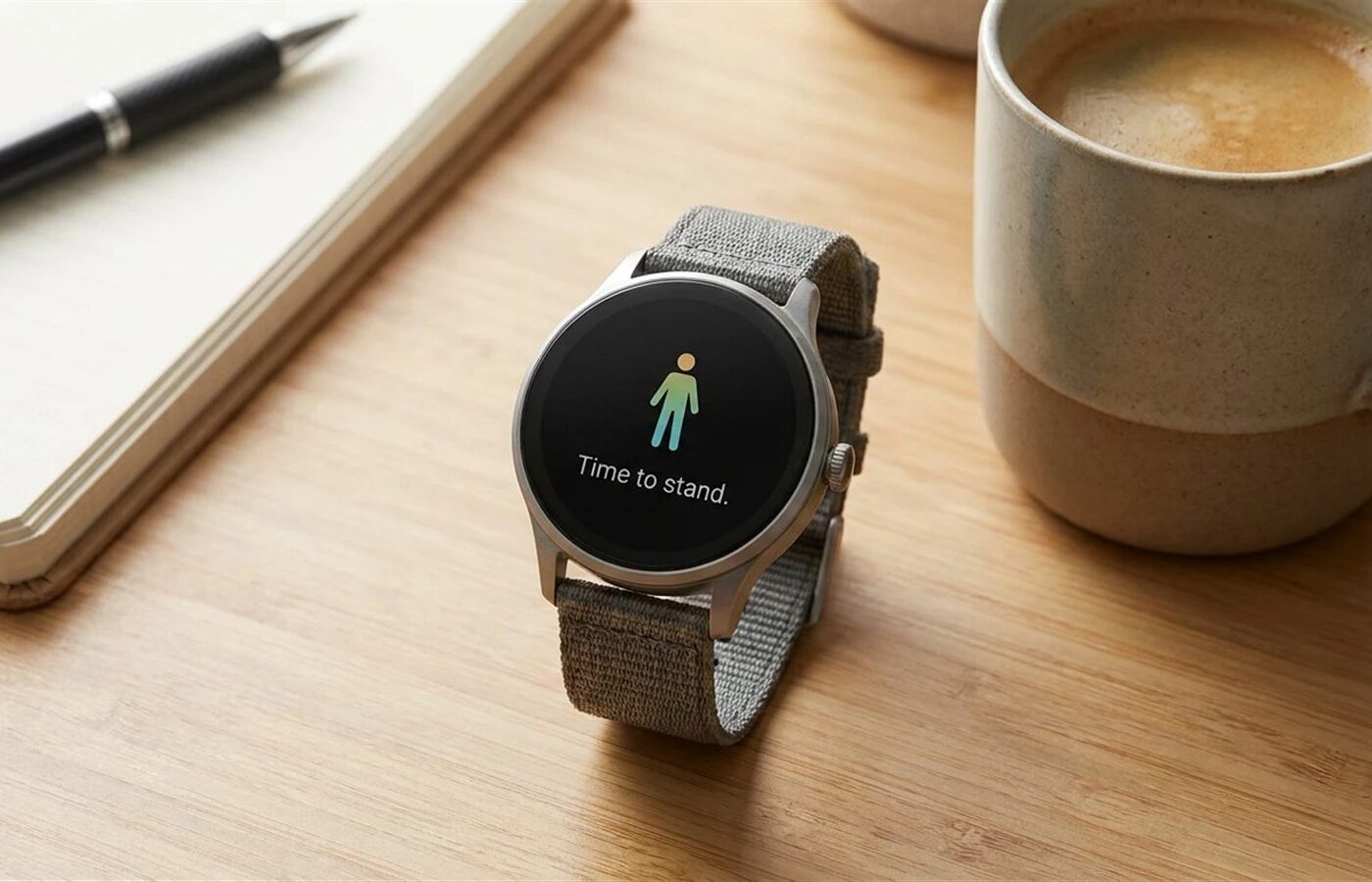
You are deep in a task, an hour flies by, and suddenly you realize you have barely moved. A friendly buzz on your wrist or a little pop-up on your screen can be just the nudge you need. Here is what researchers found when they looked at technology that reminds people to sit less, and how to make your reminders work for you.
How the 17 trials turned out
In 2017, researchers published a systematic review of computer, mobile and wearable tools designed to reduce sitting. Here is how it came out:
- People sat less. Pooling 15 of the 17 randomized trials, the tools cut sitting time by about 41 minutes a day on average.
- The effect was strongest early. Over the short term (up to three months) and the medium term (three to six months), reductions were roughly 37 to 42 minutes a day.
- It faded later. Beyond six months, the average benefit was close to zero.
- Prompts were popular. “Prompts and cues,” along with tracking your own behavior and social support, were among the most common techniques used.
Reading the results with care
Nearly all of the trials had a high or unclear risk of bias, and the results varied quite a bit from study to study. Most measured sitting time by self-report, which is not perfectly accurate. So the encouraging short-term result is worth taking seriously, but we should not expect a reminder alone to change habits for years.
Making reminders work for you
- Start gently. Many people find a prompt every 30 to 60 minutes manageable. Pick a rhythm that does not drive you up the wall.
- Make the break tiny. Stand up, stretch, refill your water or take a short lap around the room. See exercise snacks for ideas.
- Change it up now and then. Because the benefit faded over time in the studies, try new timings, new activities or a friendly challenge; see step challenges.
- Add movement you enjoy. Small bits of everyday motion add up; see NEAT and treadmill desks.
- Know what your device can do. For the bigger picture, read about what wearables can and cannot tell you.
A nudge, not a rule
A reminder is a nudge, not a rule. If you miss a few, that is perfectly fine. Every time you get up, you are doing something good for your body and your focus.
This article is for general education and is not medical advice. If you have a medical condition or mobility limits, ask your healthcare professional what kind of movement suits you.
Sources
- Stephenson A, McDonough SM, Murphy MH, Nugent CD, Mair JL. Using computer, mobile and wearable technology enhanced interventions to reduce sedentary behaviour: a systematic review and meta-analysis. International Journal of Behavioral Nutrition and Physical Activity. 2017. PubMed Central
Weight Wire is free to read. A free account lets you save articles and use the private journal and food lookup, which are free to use too. Create my free account

Weight Wire Editorial Team
Writer at Weight Wire.