Self-Weighing and Mood: Finding a Routine That Feels Right
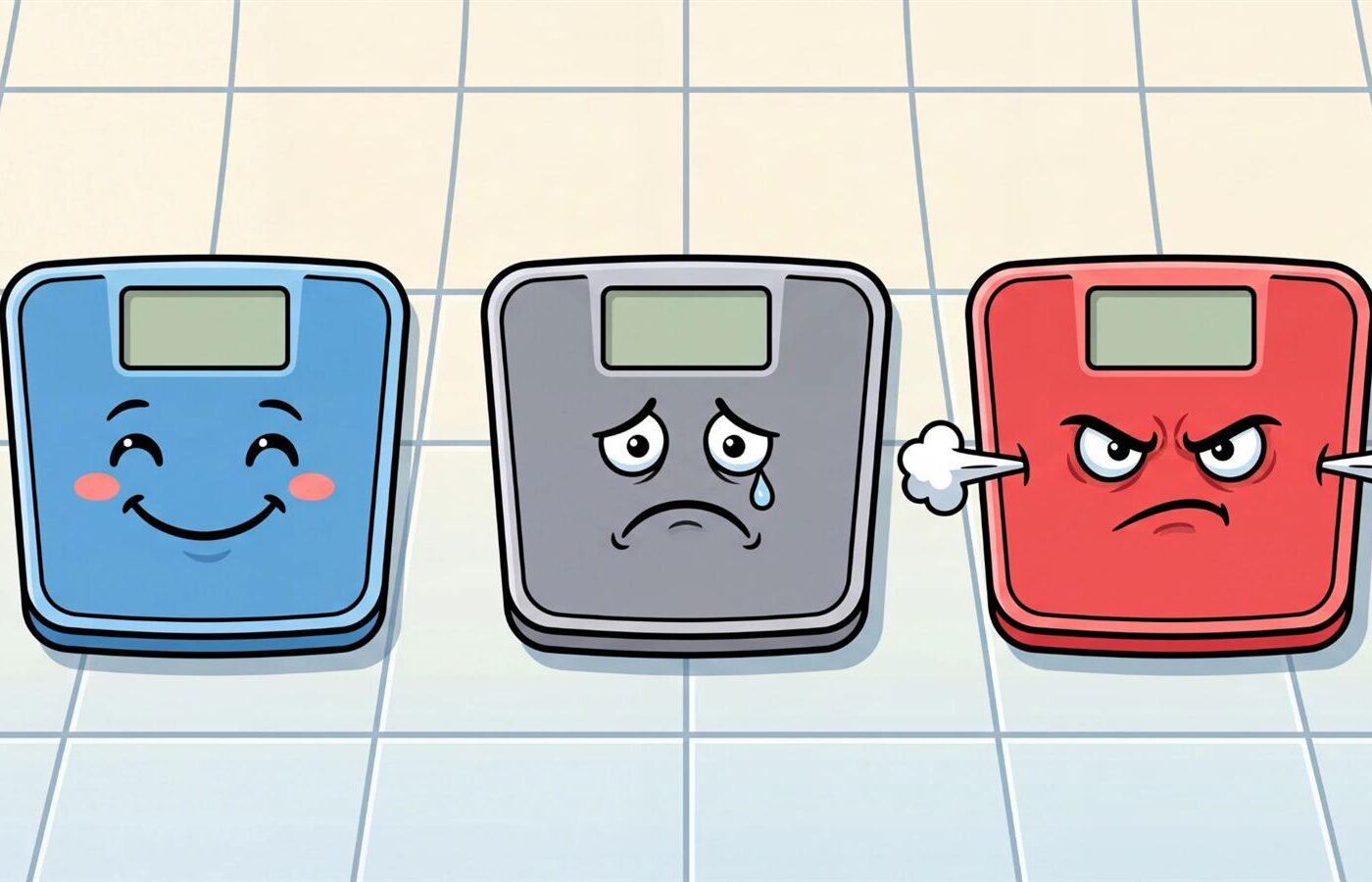
For some people the bathroom scale is a handy little check-in. For others it can put a damper on a morning. Both reactions are completely common, and researchers have looked at whether regular weighing helps or harms, with some reassuring news. This is general education, not medical advice or therapy.
Reviews of regular weighing
A 2015 systematic review in the journal Obesity, led by Yaguang Zheng, looked at 17 longitudinal studies of adults who were trying to lose weight. It found that regular self-weighing was associated with more weight loss, and it was not associated with harmful psychological outcomes such as depression or anxiety. That is encouraging!
Later reviews of intervention trials have also generally found little sign of negative psychological effects among adults in weight programs. Two caveats keep the picture honest:
- The studies varied in how often people weighed themselves and how big the effects were.
- Body image is less settled. Some studies in younger groups have linked frequent weighing to more body-image concerns, so the results are not uniform.
Why one number can mislead you
Day-to-day weight bounces around with how much water you hold, what you ate and when you last used the bathroom. Those swings are normal and say very little about your progress. That is why many people find a trend over several weeks more meaningful than any single reading, and it connects to why progress rarely runs in a straight line.
Finding a routine that feels right
- Pick a pattern and keep it consistent. The same time of day, under similar conditions, makes readings easier to compare.
- Decide how often. Some people like daily weigh-ins; others do better weekly. Neither is wrong.
- Look at the direction over weeks, not the swings.
- Add other measures. Energy, sleep, how clothes fit, strength and activity all say something the scale does not.
- Pay attention to how it feels. If weighing sends your mood or eating off course, it is perfectly fine to skip it, and a clinician or counselor can help you work out what to track.
Where Weight Wire fits
Weight Wire’s journal has an optional weigh-in log that is private to you. It shows a smoothed trend and your change over about four weeks, so a single high reading does not dominate the picture. It also has places to track activity and body measurements if you would rather not focus on weight. It is free to use. It is a tracking tool, and we have not tested it against the studies described above.
A kinder way to use the scale
The scale gives you one piece of data. It does not measure your worth, your effort or your health. Used as a quiet check-in, it can be a helpful tool; used as a daily verdict, it can wear you down. Our guide to being kind to yourself after a slip may help if a number has ever knocked your confidence.
Sources
- Zheng Y, Klem ML, Sereika SM, Danford CA, Ewing LJ, Burke LE. Self-weighing in weight management: a systematic literature review. Obesity, 2015;23(2):256-265.
Weight Wire is free to read. A free account lets you save articles and use the private journal and food lookup, which are free to use too. Create my free account

Weight Wire Editorial Team
Writer at Weight Wire.