Why Your Weight Changes From Day to Day
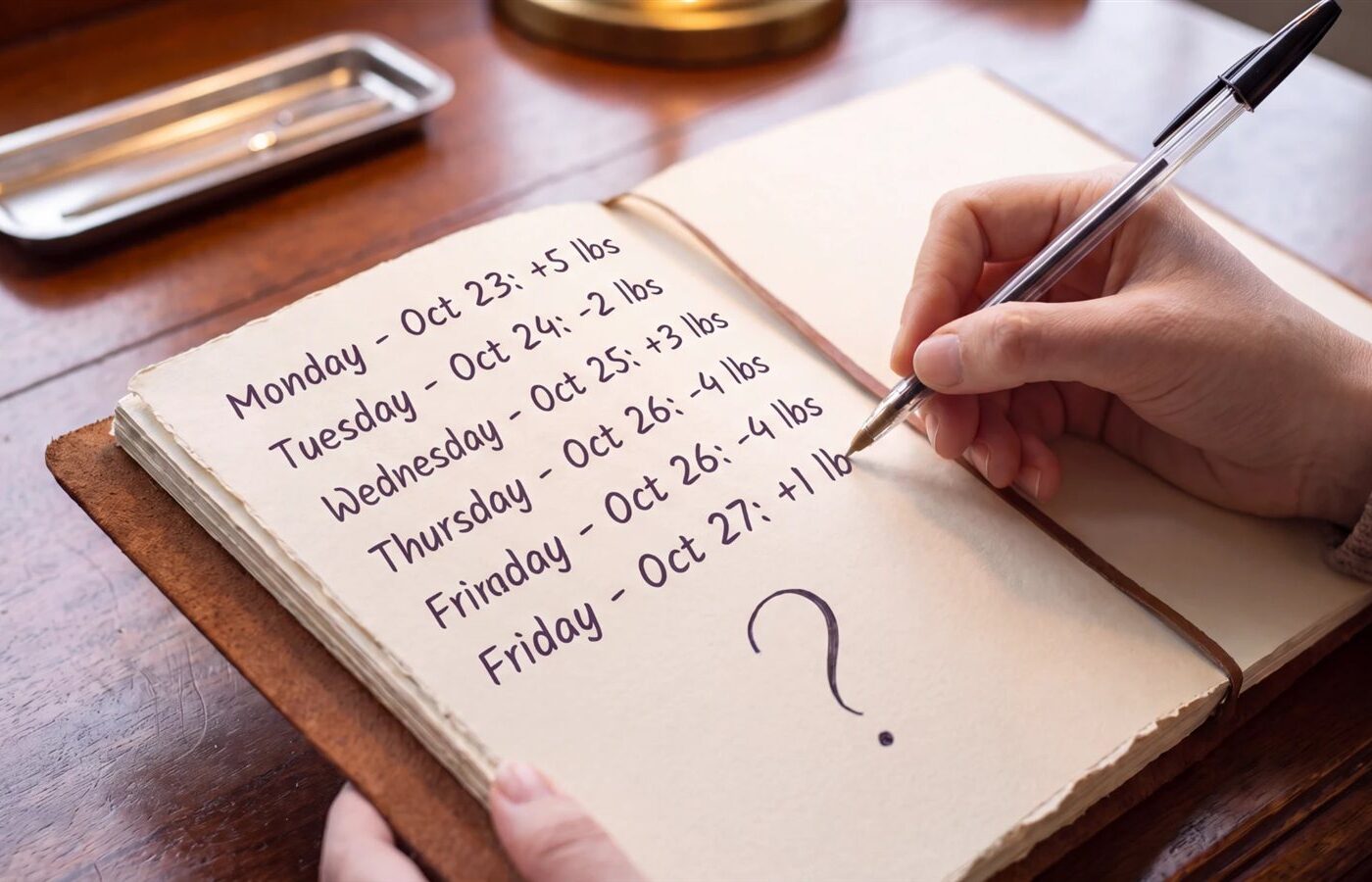
You step on the scale two mornings in a row and the number jumps by a pound or two, even though you ate the same and exercised the same. It can feel discouraging, and here is the comforting truth: it is almost always completely normal. Once you understand why, the scale gets a whole lot friendlier. This is general education, not medical advice.
Water is the big mover
About 60 percent of your body is water, and the amount changes through the day. A few things push it around:
- Salt. A saltier meal makes the body hold on to more water for a day or so.
- Carbohydrates. The body stores carbohydrate as glycogen, and each gram of glycogen is stored with several grams of water. Eating more carbohydrate can raise the scale quickly, and eating less can drop it quickly, without any real change in body fat.
- Fluids and food in the gut. What you drank and ate recently, and how recently you used the bathroom, all add to the number.
- Hormones and sleep. Hormone shifts, stress, poor sleep and hard workouts can all change how much water you hold.
How big can the swings be?
Popular sources give different figures, but they broadly agree that swings of a pound or two (roughly 1 kg), and sometimes more, from one day to the next are common. Fat changes far more slowly. As we explain in our guide to where fat goes, losing a pound of fat takes a real calorie shortfall over days, not hours, and the idea of a neat calorie rule has limits, as our look at the 3,500-calorie rule shows.
Reading the scale wisely
- Look at the trend, not the day. A weekly average or a smoothed line tells you far more than any single reading.
- Weigh under the same conditions. Same scale, similar time of day, similar clothing.
- Let one number go. A jump after a salty dinner is not a setback, just water.
- Combine measures. How clothes fit, your energy and strength, and measurements can say more than weight alone.
- Take a break if it stresses you. Some people feel better weighing less often. Our guide to self-weighing and mood looks at finding a routine that feels right.
A tool for smoothing the noise
Disclosure: Weight Wire’s free private journal has an optional weigh-in log that draws a smoothed trend line, so you can see your direction without being thrown by daily noise. It is a convenience, not medical advice, and the research above does not study it.
Sources
- Overview of normal daily body-weight variation from water, glycogen and sodium, drawn from consumer-health and nutrition sources; exact ranges vary between sources (this article states them as approximate).
- Meerman R, Brown CJ. When somebody loses weight, where does the fat go? BMJ, 2014;349:g7257 (for the slower pace of fat loss).
Weight Wire is free to read. A free account lets you save articles and use the private journal and food lookup, which are free to use too. Create my free account

Weight Wire Editorial Team
Writer at Weight Wire.