Meal Planning: A Little Planning Can Make Eating Well Easier
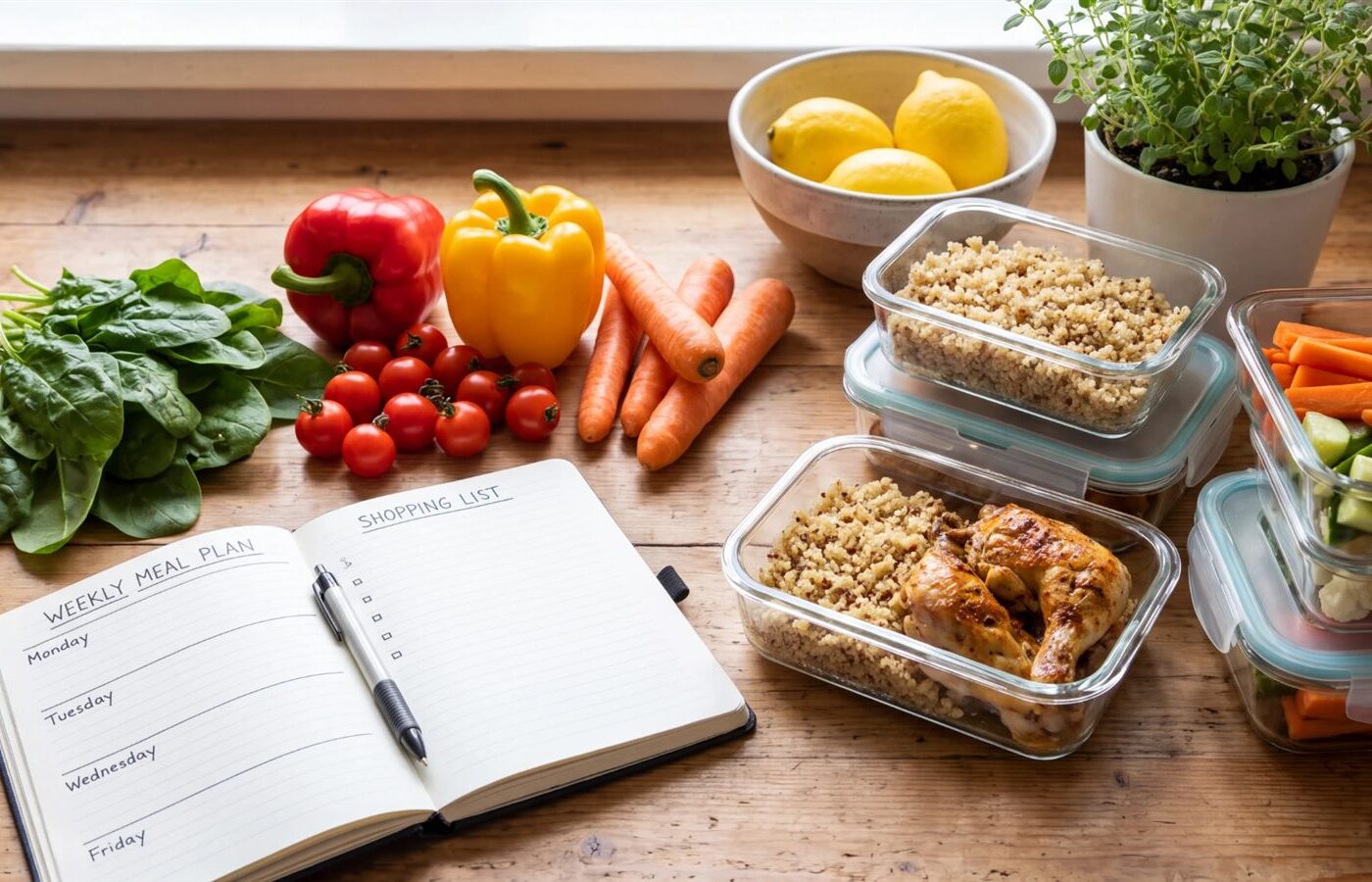
Ever notice how the evenings when you already know what’s for dinner feel so much calmer? A little planning can take the guesswork, and the last-minute takeout decisions, out of your week. A large French study looked at exactly this, and the results are encouraging. Let’s take a look.
What a big French study noticed
Researchers led by Pauline Ducrot analyzed answers from 40,554 adults in the NutriNet-Santé study and asked a simple question: do you plan the foods you will eat over the next few days? About 57 percent said they did, at least occasionally.
- Better variety and diet quality. People who planned meals tended to eat a wider variety of foods and followed national nutrition guidelines more closely.
- Lower odds of obesity. Among women, planners had about 8 percent lower odds of being overweight and about 21 percent lower odds of obesity. Among men, the link held for obesity, with about 19 percent lower odds.
Keeping it in perspective
This was an observational snapshot, so it can show a pattern but not prove that planning causes anything. Weight and height were self-reported, and people who plan ahead may also be more organized in other healthy ways. The authors themselves noted that cause and effect cannot be concluded. Still, the pattern fits what many of us feel in daily life: when the plan is made, healthy choices get easier.
Why a plan can make things easier
These are common-sense ideas rather than study findings, but they are worth trying:
- You shop with a list, so fewer impulse buys end up in the cart.
- You are less likely to hit 6 p.m. with an empty fridge and an empty head.
- You can build variety on purpose: a fish night, a bean night, a vegetable-packed stir-fry.
Easy ways to start
- Plan three dinners, not seven. Leave the rest of the week flexible for leftovers and surprises.
- Write a short shopping list from your plan. Group it by store section to keep the trip quick.
- Prep one staple. A pot of beans or a tray of roasted vegetables can anchor several meals; see our guide to beans, lentils and chickpeas.
- Fill your plate with volume. Energy density explains how vegetables and soups help.
- Enjoy the meal. A calmer pace helps too; see eating slowly.
- Be kind to yourself. A plan is a guide, not a test. Swapping Tuesday and Thursday is perfectly fine.
Where Weight Wire fits
Disclosure: Weight Wire offers its own free journal and Food Lookup, and they may be handy for planning. You can look up a food’s nutrition, save favorites and recipes, copy yesterday’s meals, and add foods to your diary. These tools were not part of the study above. Learn more at Food Lookup and My Journal.
This article is for general education and is not medical advice. If you have a medical condition or special dietary needs, talk with your healthcare professional or a registered dietitian.
Sources
- Ducrot P, Méjean C, Aroumougame V, et al. Meal planning is associated with food variety, diet quality and body weight status in a large sample of French adults. International Journal of Behavioral Nutrition and Physical Activity. 2017;14:12. PubMed
Weight Wire is free to read. A free account lets you save articles and use the private journal and food lookup, which are free to use too. Create my free account

Weight Wire Editorial Team
Writer at Weight Wire.