Warming Up: Why a Few Minutes Are Worth It
You know that feeling when your legs are a little stiff and your first sprint feels clunky? A few minutes of easy movement beforehand can change that. Warming up is one of the simplest, friendliest habits in fitness, and the research gives it a thumbs up. Let us look at why it helps and how to do one without fuss.
What a warm-up is
A warm-up is gentle movement that gradually raises your heart rate and wakes up the muscles you are about to use. Think easy walking before a run, light reps before heavier lifting, or slow arm circles before a swim.
What a review of 32 studies found
In 2010, Fradkin, Zazryn and Smoliga published a systematic review with meta-analysis of warm-ups in the Journal of Strength and Conditioning Research. The 32 studies that met the quality bar included warm-up activities beyond stretching. The authors reported:
- Performance often improved. Warming up improved performance in 79 percent of the outcomes they examined.
- Little sign of harm. They found little evidence that warming up is detrimental to people doing sport.
A fair note
Most of these studies measured athletic performance, such as sprint times and jumping, rather than everyday injury rates, so the findings do not prove a warm-up prevents injuries. Warm-ups also vary a lot in length and type. Still, a few easy minutes costs almost nothing and many people simply feel better moving afterward.
A simple five-minute warm-up
- Start easy. Walk briskly or march in place for two minutes.
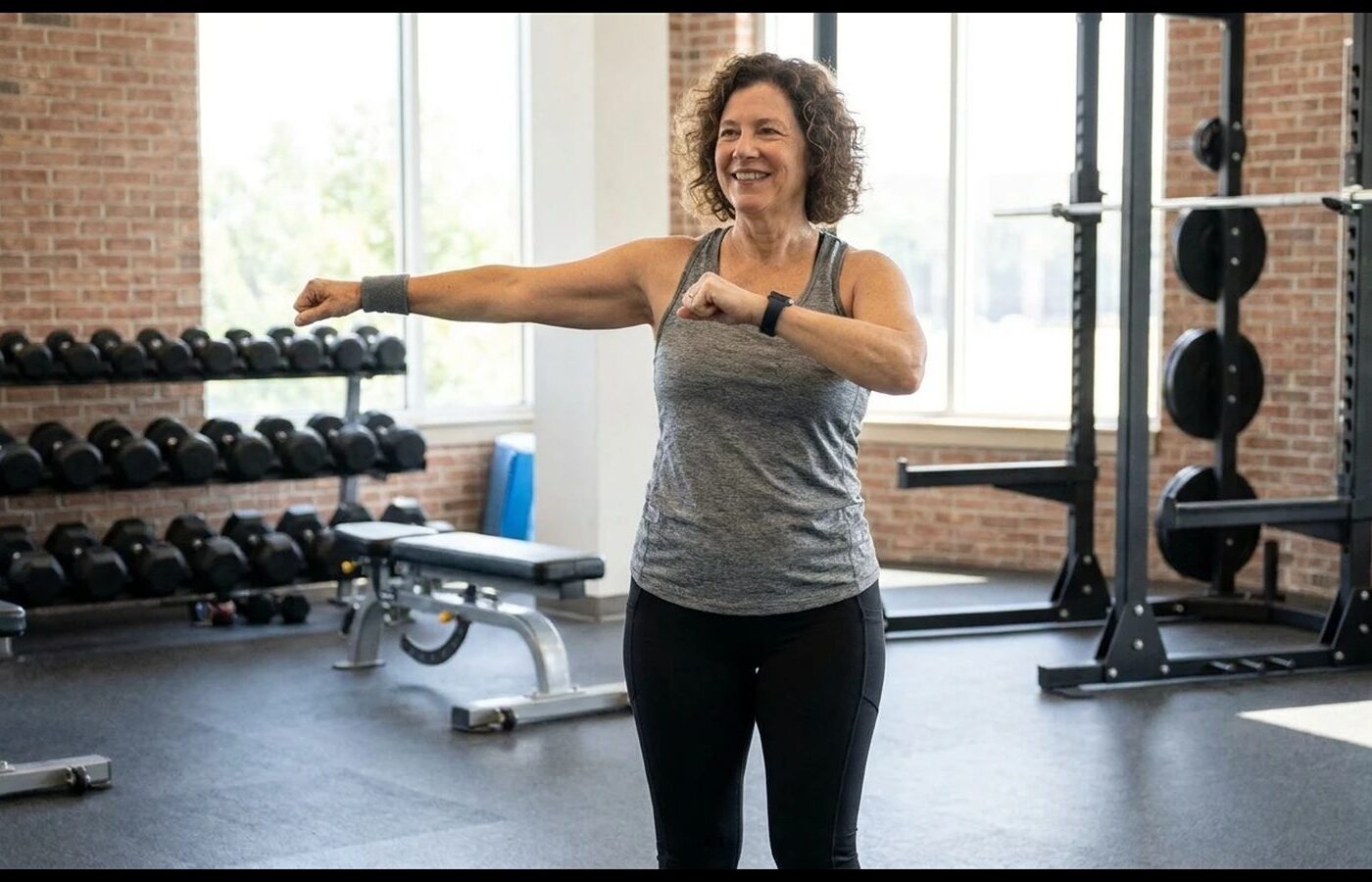
- Loosen up. Add shoulder rolls, hip circles and gentle knee lifts for a minute or two.
- Rehearse the movement. Do a lighter version of what you are about to do, such as bodyweight squats before strength training or a slow jog before a run.
- Build gradually. Pick up the pace until you feel warm and ready, not tired.
- Save long holds for later. Gentle moving stretches suit a warm-up; see our look at stretching.
Make it a habit you enjoy
If you are short on time, make the warm-up part of the workout itself, like an easy first mile. Foam rolling can be a pleasant extra, as you can read in our foam rolling piece. And if you are heading out for a short outing, even a short walk is a lovely way to ease in.
Go gently if you have concerns
If you have an injury, a heart or joint condition, or have been inactive for a long time, ask your healthcare professional what kind of warm-up suits you, and stop if you feel pain or dizziness.
This article is for general education and is not medical advice.
Sources
- Fradkin AJ, Zazryn TR, Smoliga JM. Effects of warming-up on physical performance: a systematic review with meta-analysis. Journal of Strength and Conditioning Research. 2010;24(1):140-148. PubMed
Weight Wire is free to read. A free account lets you save articles and use the private journal and food lookup, which are free to use too. Create my free account

Weight Wire Editorial Team
Writer at Weight Wire.