Do You Really Need Eight Glasses of Water a Day?
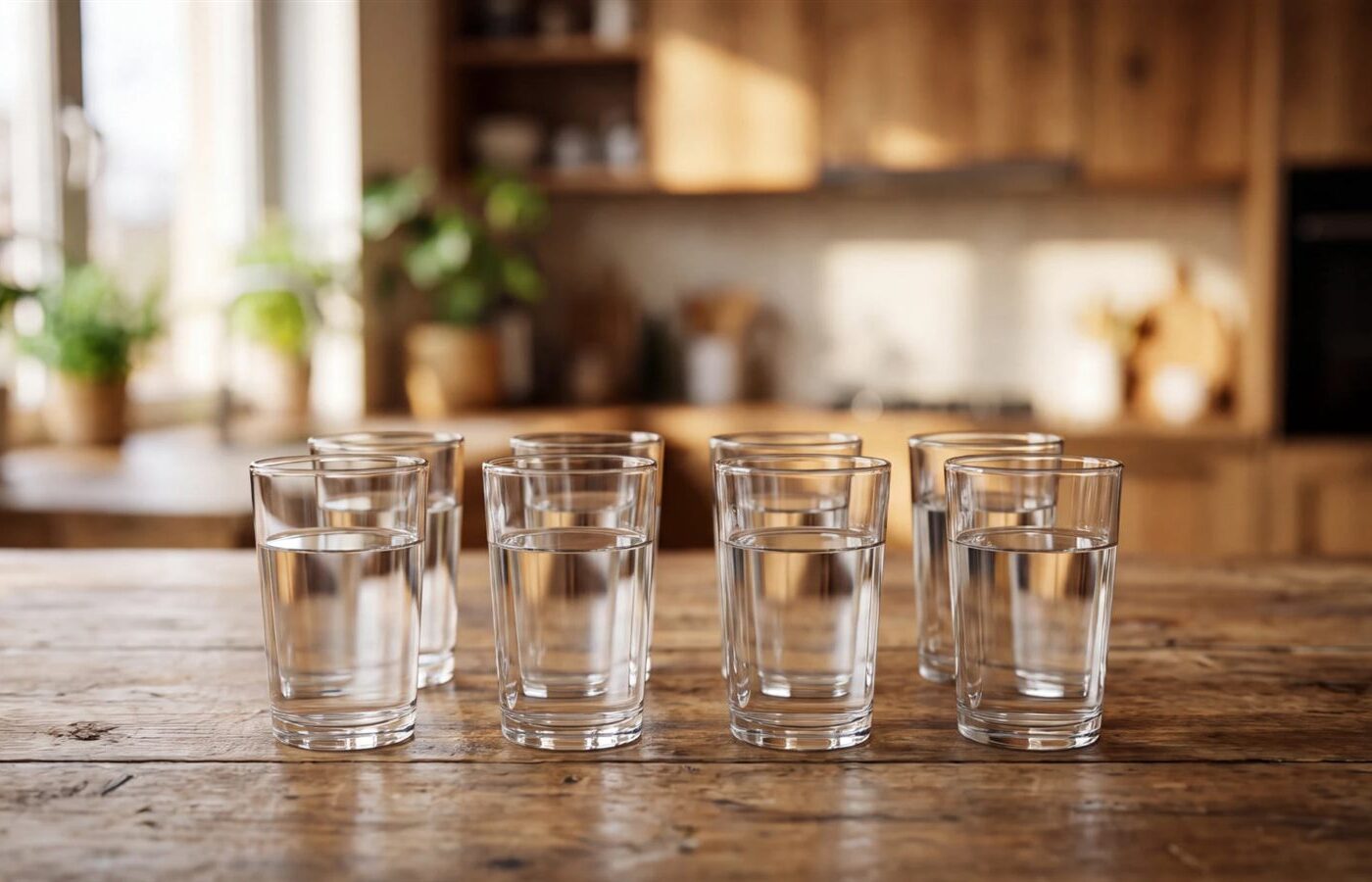
Carrying a giant water bottle everywhere is a very popular habit, and “eight glasses a day” is a rule almost everyone has heard. Staying hydrated is a lovely thing to care about. The surprise is that your body is a bit more flexible than the rule suggests. Let us take a friendly look at where the number came from and what actually works.
Where “eight glasses” came from
Physiologist Heinz Valtin took a careful look at this rule in a 2002 review in the American Journal of Physiology. He found no scientific study behind the advice to drink at least eight glasses of water a day. A widely repeated explanation is that it grew out of an older guideline that mentioned about 2.5 liters of water per day, much of which comes from food, and the food part got lost along the way.
What recommendations actually say
- Total water counts. The National Academies set an adequate intake of about 3.7 liters a day for men and 2.7 liters a day for women. That is total water from everything, including drinks and food.
- Food helps. Roughly 20 percent of our water typically comes from food, such as fruit, vegetables, soups and yogurt.
- Coffee and tea count too. They contribute to your fluids.
Needs vary quite a bit
A 2022 study in Science used isotope tracking to measure how much water the body turns over each day in 5,604 people, from infants to age 96, in 23 countries. It found considerable variation linked to things like age, sex, body size, activity and climate. In general, water use was higher in men than in women and lower in older adults. In other words, there is no single magic number for everyone.
Simple ways to stay comfortably hydrated
- Let thirst guide you. For most healthy adults, drinking when thirsty and with meals works well.
- Check your color. Pale yellow urine is a handy sign you are doing fine; very dark can mean you need more.
- Drink a little more when it is hot or you are active. If you sweat for a long time, see electrolyte drinks.
- Eat your water too. Soups, fruit and vegetables add up; see energy density.
- Make it pleasant. A slice of lemon or a cup of herbal tea can help if plain water bores you.
- Remember a glass before meals can help some people, as in our look at water before meals.
When to be a little more careful
Older adults can feel thirst less strongly, so regular sips are a good idea. If you have kidney, heart or other conditions, or take medicines that affect fluids, follow your clinician’s advice on how much to drink. Drinking extreme amounts of water in a short time is not a good idea either.
This article is for general education and is not medical advice.
Sources
- Valtin H. “Drink at least eight glasses of water a day.” Really? Is there scientific evidence for “8 × 8”? American Journal of Physiology: Regulatory, Integrative and Comparative Physiology. 2002;283(5):R993-R1004. PubMed
- Yamada Y, et al. Variation in human water turnover associated with environmental and lifestyle factors. Science. 2022;378:909-915. Tilburg University repository
- Institute of Medicine (National Academies). Dietary Reference Intakes for Water, Potassium, Sodium, Chloride, and Sulfate. 2005. National Academies Press
Weight Wire is free to read. A free account lets you save articles and use the private journal and food lookup, which are free to use too. Create my free account

Weight Wire Editorial Team
Writer at Weight Wire.