Oats and Cholesterol: How a Daily Bowl Can Help
Oatmeal is one of the most familiar breakfasts, and one of the few everyday foods with a heart-health claim on the box. The reason is a soluble fiber called beta-glucan. Here is how oats may affect cholesterol, and an easy way to use them as the weather turns cooler. This is general education, not medical advice.
How oats may help
Beta-glucan forms a thick gel in the gut. It is thought to bind bile acids, which the body makes from cholesterol, so that more of them leave in the stool. The liver then draws on cholesterol in the blood to make replacements, which can nudge blood cholesterol down.
The pooled trial results
In 2014, Whitehead and colleagues published a meta-analysis in the American Journal of Clinical Nutrition of 28 randomized controlled trials. In studies where people had at least 3 grams of oat beta-glucan a day, LDL (“bad”) cholesterol was about 0.25 mmol/L lower than in control groups (roughly 10 mg/dL), and total cholesterol was about 0.30 mmol/L lower. HDL cholesterol and triglycerides did not change much.
- The amount mattered. The studies used at least 3 grams of beta-glucan a day, usually from oat products such as oatmeal, oat bran or oat-enriched foods.
- Type mattered. The analysis focused on high molecular weight beta-glucan, which is the kind found in whole, minimally processed oats.
- The effect was modest. A change of this size is helpful, not dramatic, and it works best alongside other habits.
Getting enough
Labels differ, so check the fiber information on your product. Oat bran has more beta-glucan than regular rolled oats, and instant or heavily processed oat products may have less of the large, gel-forming kind. Our guide to reading a nutrition label can help you compare.
Beyond cholesterol
Oats are also filling. They fit with what we describe in why some foods fill you up more than others and with the fiber and whole grain evidence in our fiber guide and our whole grains guide. For another heart-friendly staple, see olive oil.
A simple fall bowl
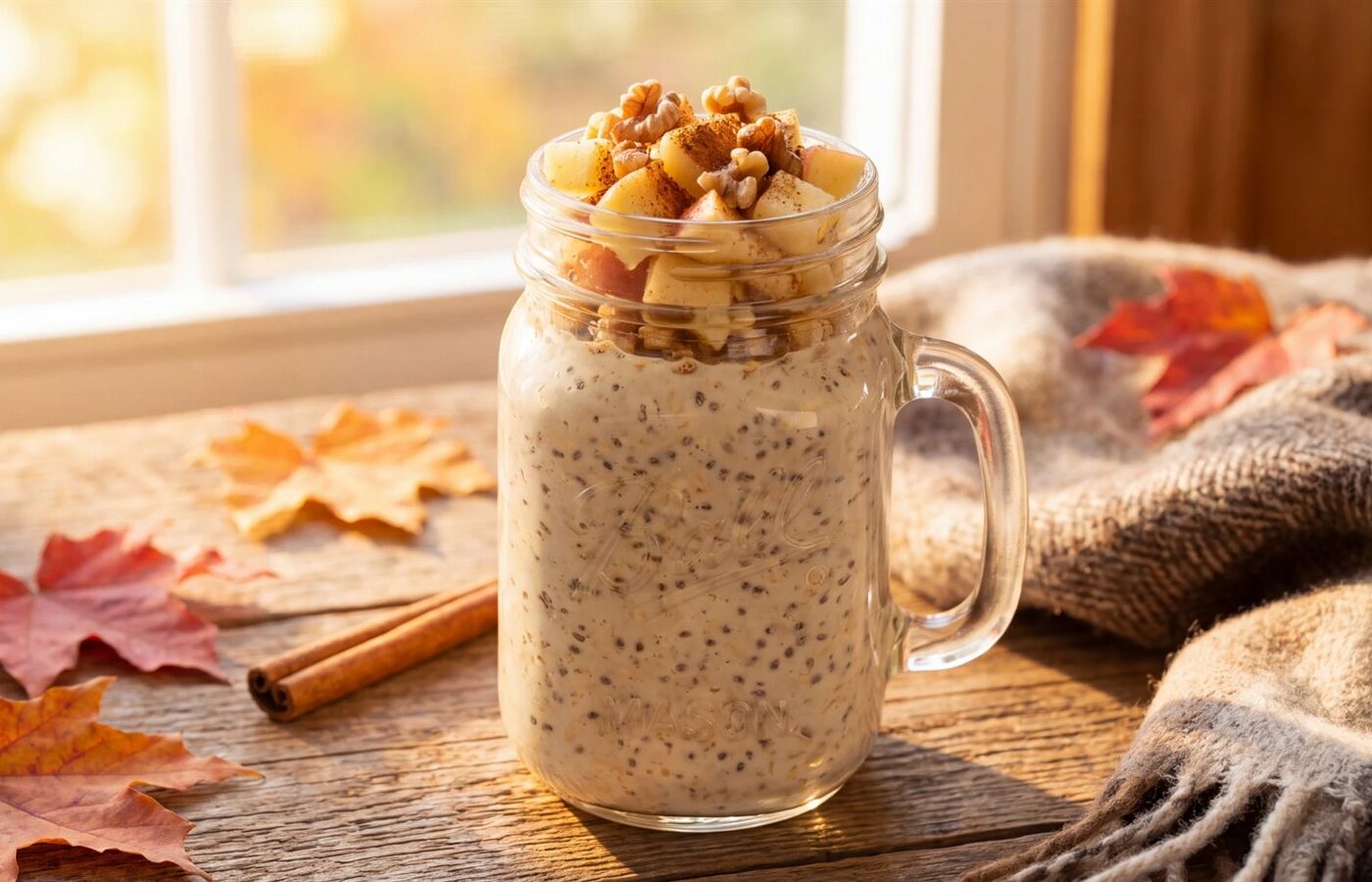
This is an original, flexible recipe for one serving of overnight oats.
- 1/2 cup rolled oats (not instant)
- 1/2 cup milk or unsweetened plant milk
- 1/4 cup plain yogurt
- 1 tablespoon chia seeds and a pinch of cinnamon
- 1/2 cup diced apple or berries, plus a few chopped walnuts
Stir everything together in a jar, cover and refrigerate overnight. In the morning, add the fruit and nuts. Warm it for a minute if you prefer. If you like to track what you eat, you can work out the nutrition of your own version in the recipe builder on Food Lookup. Disclosure: Food Lookup is our free tool, and it was not part of the research above.
Sources
- Whitehead A, Beck EJ, Tosh S, Wolever TMS. Cholesterol-lowering effects of oat beta-glucan: a meta-analysis of randomized controlled trials. American Journal of Clinical Nutrition, 2014;100(6):1413-1421.
- U.S. Food and Drug Administration. Health claims for soluble fiber from certain foods and coronary heart disease (check the regulation text for the exact serving and daily amounts).
Weight Wire is free to read. A free account lets you save articles and use the private journal and food lookup, which are free to use too. Create my free account

Weight Wire Editorial Team
Writer at Weight Wire.