Foam Rolling: A Warm-Up Tool More Than a Recovery Cure
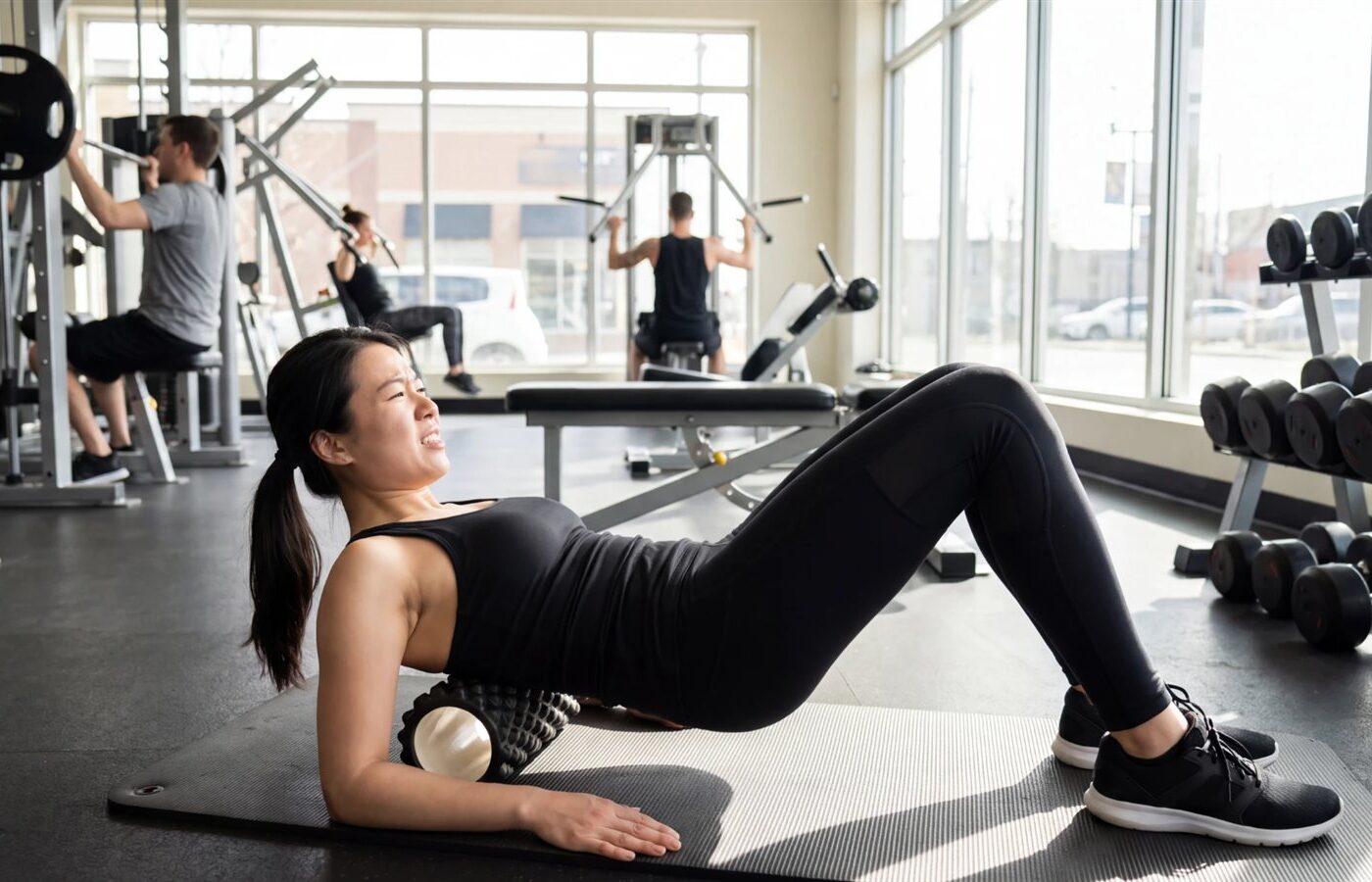
Foam rollers have gone from physical therapy clinics to nearly every gym floor, and plenty of people swear by them: a little rolling to loosen up before a workout, and a little more afterward to ease soreness. The research is more modest than the marketing, but there is real good news in it. Here is what a large review found. This is general education, not medical advice.
A review of 21 studies
In 2019, Wiewelhove and colleagues published a meta-analysis in Frontiers in Physiology that pooled 21 studies of foam rolling. They separated rolling before exercise (14 studies) from rolling afterward (seven studies) and looked at sprint, jump and strength performance, flexibility and muscle soreness.
Rolling before you move
- You may get a little more flexible. About 4 percent on average, a small but welcome boost.
- A touch more sprint speed. About 0.7 percent, also small.
- Jumping and strength stayed steady. Rolling did not hurt them, and the effects were negligible, so it is safe to warm up this way.
Rolling afterward
- Soreness felt a bit better. The perception of muscle pain dropped by about 6 percent, the biggest effect in the review, and a moderate one.
- Recovery got a small lift. Sprint and strength dropped a little less after hard exercise in people who rolled afterward.
The authors described the effects as rather minor, and in places negligible, but said they can matter in some situations, and that foam rolling seems best suited to a warm-up rather than as a stand-alone recovery tool. In other words, it is a nice extra, and a pleasant one.
Making the most of it
- It is an easy, low-risk add-on. A minute or two per muscle group before a workout is a lovely way to warm up and loosen tight spots.
- It works best as part of the team. A dynamic warm-up, good sleep, enough food and rest days do the heavy lifting for recovery. Our guide to stretching covers related ideas.
- If it feels good, that counts. Moving more comfortably is a real benefit, even when the measured effects are small.
Rolling safely and comfortably
- Go slowly. About 30 to 60 seconds per muscle, pausing on tender spots.
- Keep the pressure friendly. A bit of discomfort is normal, sharp pain is not.
- Stick to the big muscles. Calves, thighs and upper back are great, and it is best to steer clear of joints, the lower back and the front of the neck.
- Check first if you have a condition. If you have blood clots, severe osteoporosis, nerve problems or a recent injury, a quick word with a clinician comes first.
Fitting it into your week
Foam rolling shines as part of a routine that includes strength training, as in our guides to strength training for beginners and how often to lift, plus balance work like the exercises in our falls prevention guide.
Sources
- Wiewelhove T, Doeweling A, Schneider C, et al. A meta-analysis of the effects of foam rolling on performance and recovery. Frontiers in Physiology, 2019;10:376 (figures from the abstract).
Weight Wire is free to read. A free account lets you save articles and use the private journal and food lookup, which are free to use too. Create my free account

Weight Wire Editorial Team
Writer at Weight Wire.